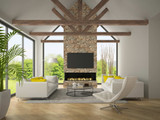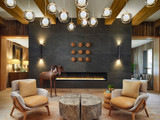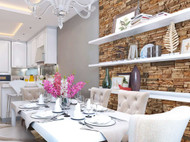
When one wall seems to do more visual work than the others, is it an accent wall or a feature wall? The terms are often used interchangeably, and there is plenty of overlap, but understanding the accent wall versus feature wall distinction can help you make more intentional design decisions.
In general, an accent wall creates contrast within an existing room, while a feature wall takes on a larger role as the room’s primary focal point. Both can use color, texture, pattern, and architectural materials, but they differ most in scale, purpose, and visual emphasis.
For more background on accent walls, explore our accent wall ideas article. Otherwise, keep reading to learn what separates an accent wall from a feature wall, how designers approach each, and how to choose the right wall for your space.
Accent Wall vs Feature Wall: What’s The Real Difference?
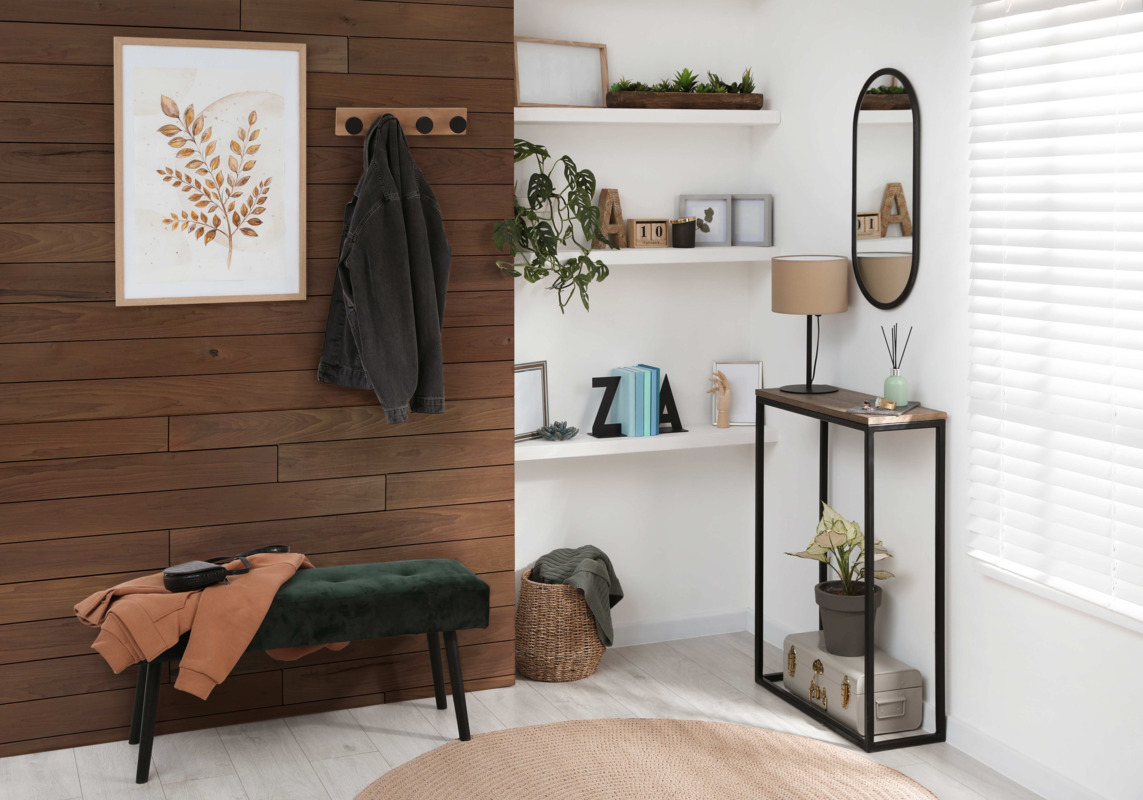 Thermal Poplar Solid Wood Wall Paneling
An accent wall is typically one wall that stands apart from surrounding surfaces through a different color, finish, texture, or material. Its purpose is to add visual interest while still supporting the overall room design.
A feature wall takes that idea a step further. Rather than simply adding contrast, it typically plays a more prominent role in the room’s design, becoming an intentional focal point that organizes the room around it. Think of a floor-to-ceiling fireplace surround, a dramatic paneled wall behind a bed, or a textured wall that anchors a large open living space.
That said, there isn’t a hard line separating the two: the same wall could reasonably be described as either. A helpful way to think about the difference between an accent wall and a feature wall is visual weight and intent: An accent wall complements the room by introducing contrast, while a feature wall is designed to command attention and help define the space.
Which Wall is Best for an Accent Wall?
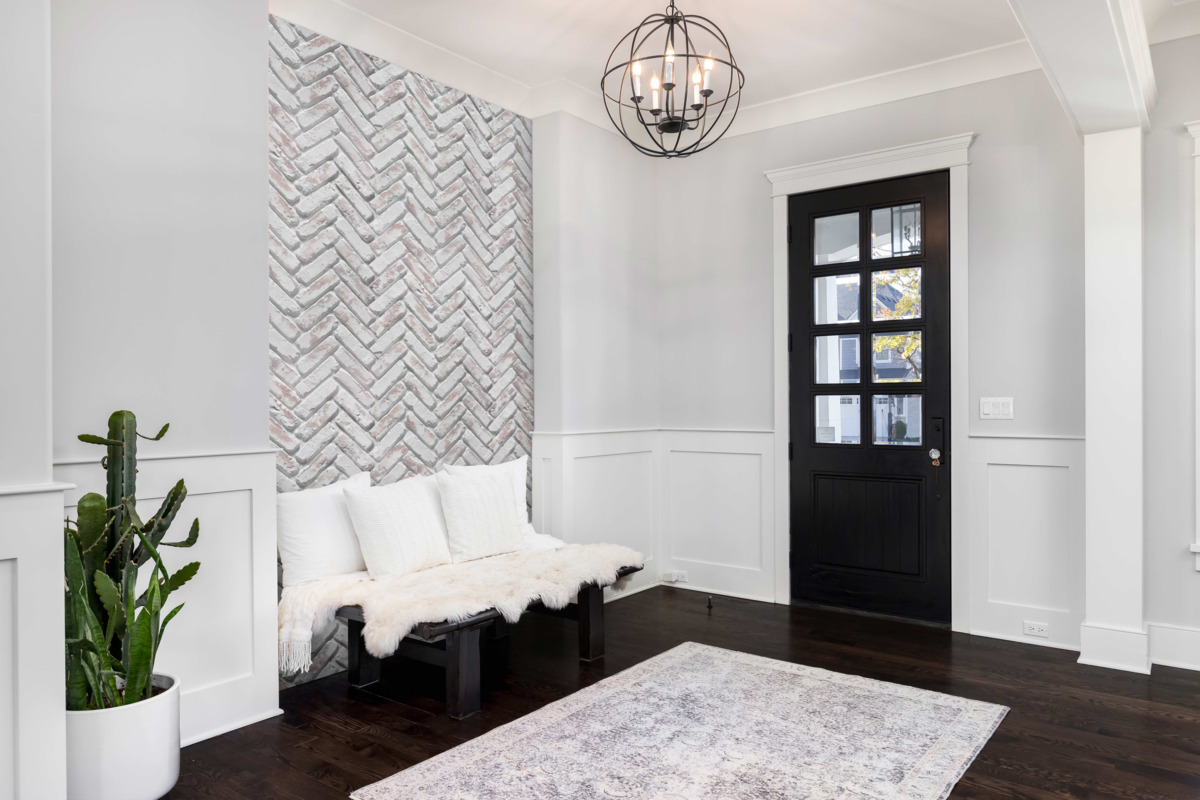 Old Chicago Herringbone Faux Brick Wall Panels in Whitewash Brick
If you’re wondering which wall should be the accent wall, start by looking at the room’s natural sightlines. The best choice is often the wall your eye already lands on when you enter, like the wall behind a bed, sofa, dining table, or other major furnishing.
Rather than forcing the eye somewhere new, a well-placed accent wall can reinforce a focal point that already makes sense. If a room already has a fireplace, large window, or another strong architectural feature, an accent treatment should generally reinforce that focal point rather than pull attention in the opposite direction.
Pay attention to visual balance, too. A highly fragmented wall with several doors or openings may not provide enough uninterrupted space for the treatment to feel cohesive.
Want an easy gut check test? Stand at the room’s main entrance and notice where your eye goes first. If emphasizing that wall would make the room feel more complete rather than more complicated, you’ve probably found a strong candidate.
Which Wall is Best for a Feature Wall?
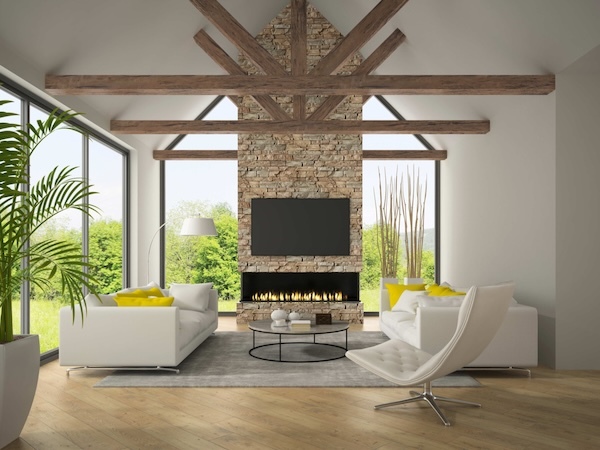 Nevada Dry Stack Faux Stone Wall Panels in Ponderosa | Timber Faux Wood Beams in Latte
Determining which wall is best for a feature wall requires thinking beyond contrast and considering architecture, proportion, and scale. Look for a wall that already commands attention or has the potential to define the room. This could be a fireplace wall, a tall wall beneath a vaulted ceiling, or a broad wall that terminates an important sightline.
In larger or open-plan spaces, a feature wall can also create a stronger sense of structure by visually anchoring a seating, dining, or entertainment area. The treatment should feel proportional to the space. Larger rooms can usually accommodate stronger textures and more expansive applications without becoming visually overwhelmed.
But bigger isn’t automatically better. The ideal feature wall doesn’t have to be the room’s largest surface. Its location, proportions, relationship to the furniture, and visibility throughout the space matter more than square footage alone.
Use Architectural Materials to Control Visual Impact
Material choice can determine whether a treatment reads as a subtle accent or a commanding feature. Plus, architectural materials give you something paint alone can't: dimension and texture.
For accent walls, the goal is often controlled contrast. Faux wood, brick, or stone can introduce texture into an otherwise simple space without dominating the entire design. Wood accent wall ideas can introduce warmth and natural character, while brick accent walls add distinctive texture. Stone accent walls, with their rugged texture, are a strong choice for channeling a nature-inspired look.
For feature walls, those same materials can be used at a larger scale to create architectural presence. For example, faux stone panels can give a full-height wall a strong, grounded appearance while tying in with large windows elsewhere in the room to strengthen the room’s indoor-outdoor connection. Meanwhile, faux brick panels introduce masonry-inspired character and texture. Solid wood paneling can add warmth and linear movement, while acoustic wall panels add streamlined wood styling while helping manage sound within your space.
The important takeaway is that the material itself doesn't decide whether you're creating an accent wall or a feature wall. How much of it you use, where you put it, and how strongly it contrasts with the rest of the room all influence the wall's visual weight.
Accent or Feature? Let the Room Make the Call
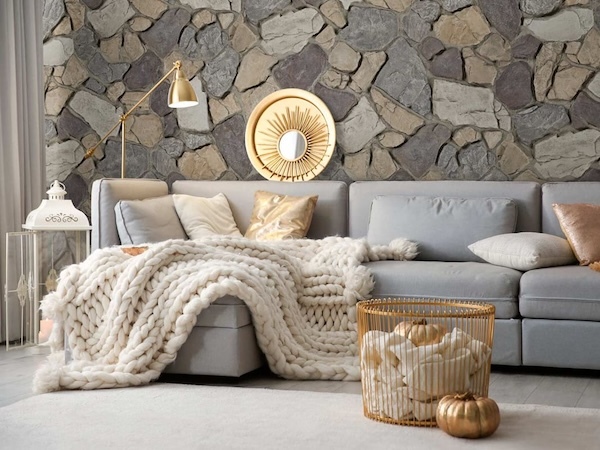 Anson Faux Stone Panels in Mist
When comparing a feature wall versus an accent wall, ask what the room is currently missing. If the architecture already provides a clear focal point, but the space needs more color, depth, or texture, an accent wall may be enough. However, if the room lacks structure or needs one dominant visual anchor, a feature wall can make a stronger contribution to the overall design.
Style certainly matters, too, but the underlying principle remains the same: The wall should complement the architecture. It shouldn’t feel like it was added as an afterthought.
Before committing to one wall style, we recommend you ask yourself three questions:
- Where does my eye naturally go when I enter the room?
- Does the space need added contrast—or a stronger focal point?
- Will the material and scale work with the existing architecture or compete against it?
If you're adding interest to an already well-defined room, you're probably thinking like an accent wall designer. If you're creating the element that the rest of the room will visually revolve around, you're moving into feature wall territory.
Make Your Focal Wall Feel Like It Belongs
Whether you choose an accent wall or a larger architectural feature, successful wall treatments begin with a clear purpose. Consider where the eye naturally travels, how much visual weight the room can support, and whether the goal is subtle contrast or a defining focal point.
Once you know the role you want your wall to play, you can start narrowing down the material and finish. Barron Designs offers faux stone, faux brick, and faux wood panels for adding realistic texture, along with solid wood planks and acoustic wall panels for bringing their own distinct character to a space.
For a risk-free start to your project, we recommend ordering wall panel samples to compare faux stone, brick, and wood options—as well as slat wood acoustic paneling—in your own room. Seeing the colors and textures alongside your flooring, furniture, lighting, and other finishes can help you decide which treatment deserves to become part of your design.
Shop Related Products