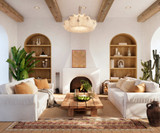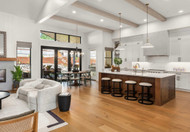
Organic modern style blends the simplicity of modern design with the warmth and texture of natural materials. At its core, it takes the clean lines, restraint, and architectural clarity associated with modern interiors and softens them with layered neutrals, matte finishes, and tactile surfaces. The result is a space that feels polished without being stark, minimal, or cold.
That balance is a big reason why organic modern style resonates so strongly right now. Homeowners are drawn to spaces that feel calm, grounded, and uncluttered, but still warm and livable. Compared to traditional modern design, which can sometimes read as sleek and austere, organic modern design introduces more softness through wood tones, subtle variation, and natural texture.
What is Organic Modern Style?
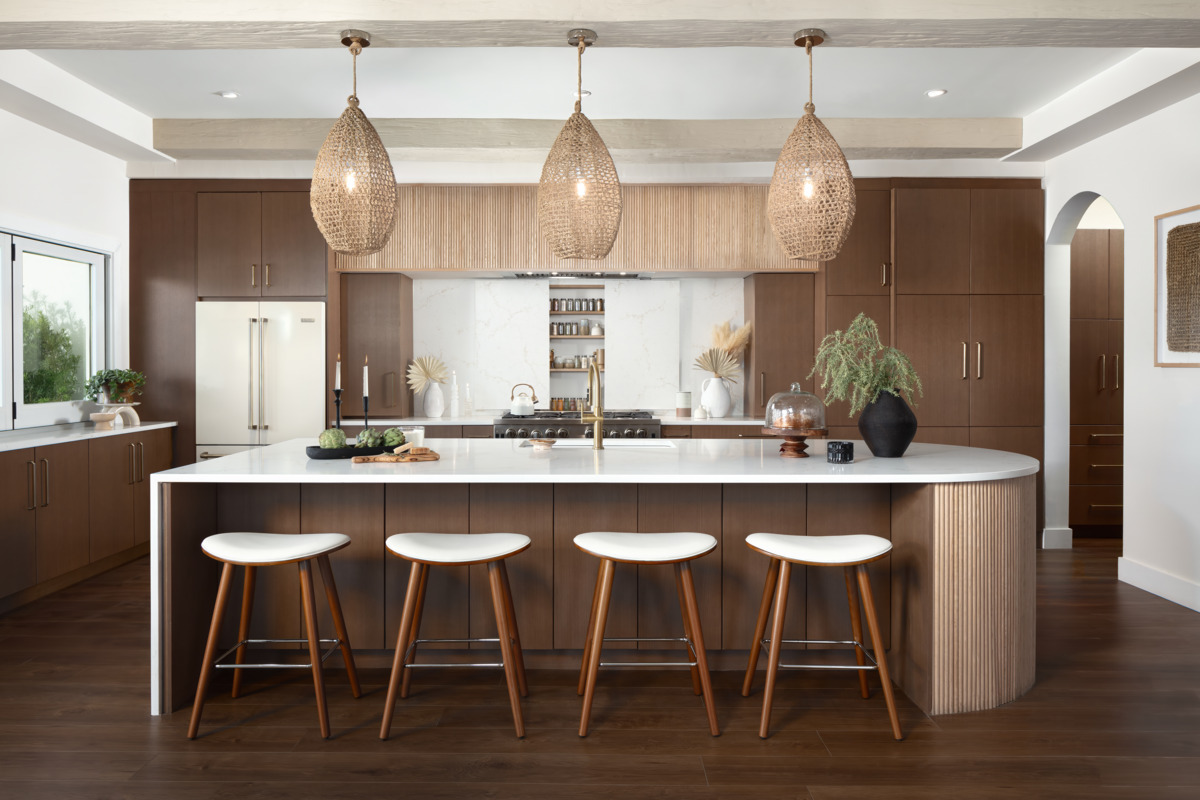
Heritage Faux Wood Beams, Finished by Customer
The simplest answer is that organic modern style is a modern aesthetic shaped by nature. It keeps the structure, simplicity, and discipline of modern interiors, but tempers them with natural materials, earthy tones, and surfaces that feel more relaxed and inviting. Rather than relying on bright color or ornate detail, organic modern spaces create interest through contrast, texture, and materiality. The overall look is restrained, but not sterile. It feels intentional, but still comfortable.
At a glance, organic modern design is defined by:
- Clean, architectural lines
- Layered neutral color palettes
- Natural materials like wood and stone
- Matte, low-sheen finishes
- Texture used in place of ornamentation
Why Organic Modern Style Feels So Current
Part of the appeal of organic modern style is that it offers a middle ground that many homeowners are looking for. It feels elevated and architectural without being severe, and minimal without feeling empty. This balance works especially well today because people often want interiors that are:
- Calm and uncluttered
- Warm rather than stark
- Polished but still approachable
- Simple without feeling flat
The organic modern style answers that need by combining clean structure with softness and visual depth. It reflects a broader shift in design—away from high-contrast minimalism and toward spaces that feel more grounded, tactile, and livable.
How it Differs From Traditional Modern Style
Organic modern and traditional modern styles share a foundation in simplicity, but they do not feel exactly the same.
- Traditional Modern: Sharper, sleeker, sometimes more austere
- Organic Modern: Warmer, softer, and more layered
- Both: Value clean lines and restraint
- Organic Modern in particular: Puts emphasis on texture, material warmth, and subtle variation.
In other words, the organic modern style doesn’t reject modernism, but humanizes it instead.
The Core Elements of Organic Modern Design
Rough Sawn Faux Wood Beams in Caramel
One of the defining traits of organic modern design is its reliance on simple silhouettes and architectural clarity. Lines are clean, forms are restrained, and spaces usually feel open rather than crowded.
At the same time, the look avoids feeling rigid or severe. Designers use careful material choices, rounded forms, muted contrast, and tactile finishes to create a softer atmosphere.
Below, we’ll explore how colors, materials, finishes, and textures work together to create comfortable spaces.
Warm, Nature-Led Palettes
Color plays a major role in shaping the organic modern look. Instead of leaning on cool starkness alone, this style typically uses layered neutrals and earthy tones that feel grounded and natural. Common colors include:
- Warm white
- Sand
- Taupe
- Beige
- Muted brown
- Clay
- Matte black accents
Combining dark and light shades from these color families creates depth without introducing visual clutter. It also supports the style’s quiet, calming atmosphere.
Natural Materials and Finishes
Natural materials are what truly bring this style to life. Wood, stone, linen, clay, and plaster-like surfaces all help create the sense of warmth that distinguishes the organic modern style from more conventional modern styles.
Matte finishes are especially important because they let texture take the lead. Instead of relying on shine, the style uses low-sheen surfaces to create a look that feels softer, more grounded, and more architectural.
Texture as a Defining Feature
In organic modern interiors, texture does a lot of the design work. Rather than depending on heavy ornamentation or bold patterns, the style creates interest through surfaces and materials. This can include:
- Visible wood grain
- Tonal variation
- Subtle patterns
- Woven or nubby textures
This is part of what makes architectural surfaces so important in organic modern spaces. Walls and ceilings are not just background elements. They help establish rhythm, warmth, and atmosphere in a way that feels integrated into the room’s structure.
How to Bring Organic Modern Style to Life With Architectural Elements
One of the defining characteristics of organic modern design is how much emphasis it places on architectural surfaces. Instead of relying on decor alone, this style uses ceilings, walls, and linear elements to introduce structure, warmth, and texture in a way that feels built-in rather than applied.
The following ideas highlight how subtle architectural upgrades can bring organic modern style into a space—without overwhelming it.
Ceiling Beams Add Clean Structure
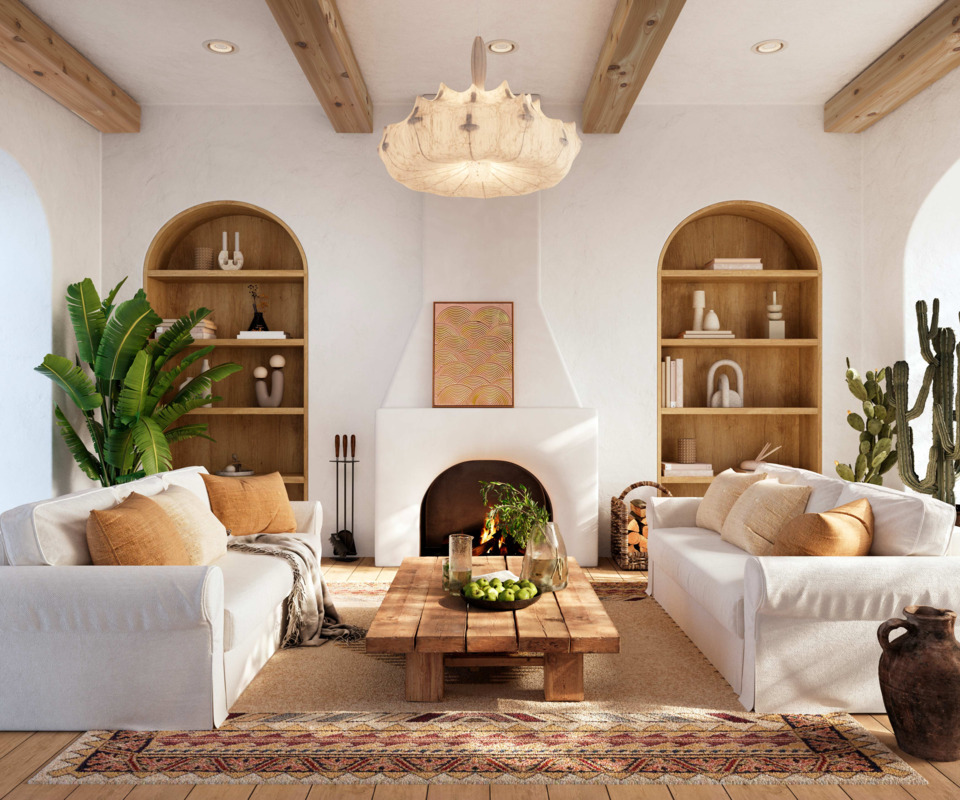
Smooth Wood Beams in Unfinished
The organic modern style often comes down to adding structure in a restrained way. Our Smooth Wood Beams are a natural fit because they bring clean-lined definition overhead while still introducing warmth through a wood look.
For rooms that need a little more variation, Driftwood Faux Wood Beams or Heritage Faux Wood Beams can offer a softer alternative with a bit more natural character and texture. These styles align especially well with organic modern design because they introduce subtle variation without disrupting the overall simplicity of the space.
Wood Paneling Adds Warmth
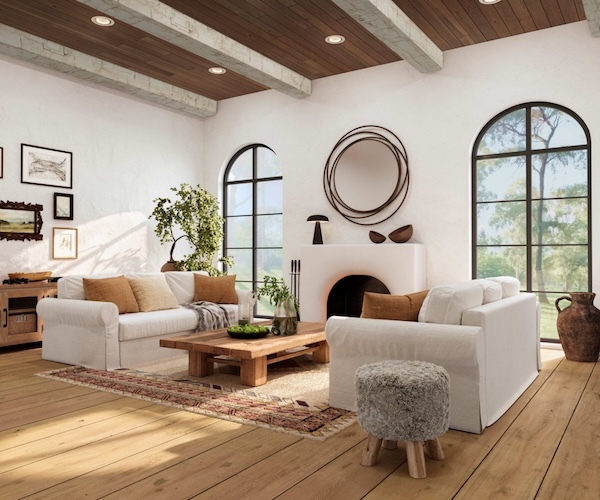
Thermal Poplar Solid Wood Paneling, Rough Hewn Faux Wood Beams in Toasted Marshmallow
Our Solid Wood Paneling offers another way to express the organic modern style. Used on a wall or ceiling, it adds warmth, rhythm, and natural texture to interior spaces. The linear layout also reinforces the clean, directional flow that defines many organic modern interiors.
Slatted & Patterned Surfaces Create Rhythm Without Clutter
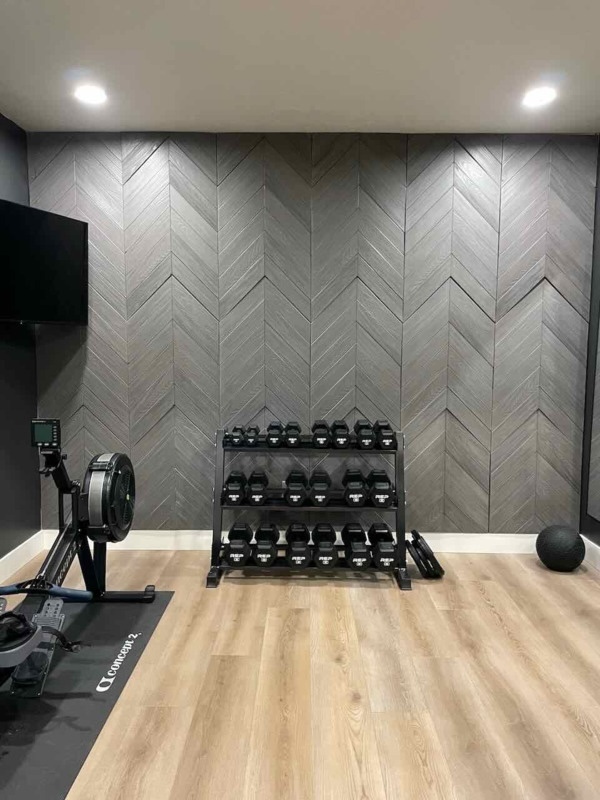
Chevron Faux Wood Wall Panels in Graphite Lead
Organic modern spaces also benefit from wall treatments that add a sense of movement without overwhelming the room. Our Acoustic Panels are a particularly good fit for this style because they deliver linear rhythm, texture, and a clean architectural look.
For a more directional accent, our Chevron Faux Wood Panels can add dimension along with a controlled pattern. Used thoughtfully, they help create visual movement while keeping the overall look refined. This kind of subtle patterning is key in organic modern design: it adds interest without introducing visual noise.
Create Comfortable Living Spaces With Organic Modern Style
The organic modern style is all about striking a comfortable balance. It combines the clarity and restraint of modern design with the texture, warmth, and material richness that make a space feel inviting. Rather than relying on excess decoration, it uses layered neutrals, matte finishes, and architectural details to create depth in a quieter, more intentional way.
If you’re looking to bring this style into your own space, start with the architectural elements that shape it. Materials like smooth wood beams and faux wood beam styles introduce clean structure overhead, while solid wood paneling adds warmth and natural variation. For added rhythm and acoustic comfort, acoustic panels and chevron faux wood panels can help create texture and movement without overwhelming the space.
When these elements work together, the result is a space that feels calm, grounded, and thoughtfully designed—capturing the essence of organic modern style in a way that feels both current and lasting.
Shop Related Products