Noise affects everything, from how well you sleep at night to how productive you are during the day to how enjoyable your evening entertainment hours are. Whether you’re optimizing your home office or improving acoustics in commercial spaces, having the right acoustic treatment strategy and materials makes a huge difference.
One of the most effective ways to reduce noise and echo is by using materials that offer Class A sound absorption. In this article, we’ll outline what Class A sound absorption is, why sound absorption ratings matter, and how you can easily achieve professional-level sound treatment results with Class A-capable acoustic panels.
Understanding Sound Absorption Ratings
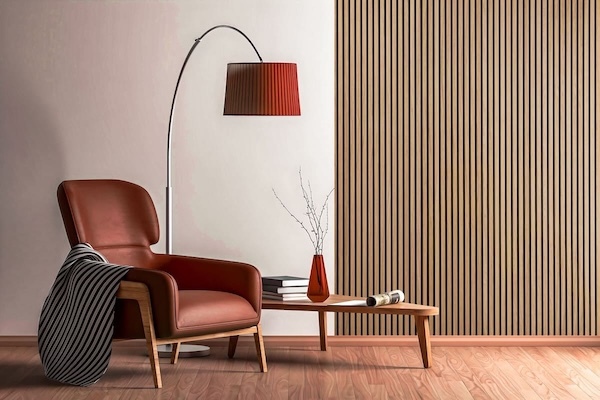
Slat Wood Acoustic Wall Panels in Teak
So, what is Class A sound absorption? And how does it stack up against other sound-related ratings? Before we dive into that, let’s first look at how sound absorption is measured.
Product manufacturers and testing labs use the Noise Reduction Coefficient (NRC) to measure the acoustic performance of materials such as acoustic panels, insulation, and other products commonly used for soundproofing. The NRC is a measure of how much sound a product (or a combination of products working together) can absorb versus how much it reflects. Higher percentage numbers mean better sound control.
NRC Ratings Correspond With These Sound Absorption Classes:
- Class E and D: These classes provide minimal sound absorption and are mostly reflective, offering limited acoustic benefits.
- Class C: Offers moderate performance (60%–70% absorption), good for controlling basic echoes and reverberation.
- Class B: Absorbs 80%–85% of sound energy—commonly used in studios, conference rooms, and offices.
- Class A: The highest level of sound absorption (90% to 100%)—ideal for spaces that require top-tier acoustic performance like recording studios, classrooms, home theaters, or podcasting spaces.
Why is Sound Absorption Important?
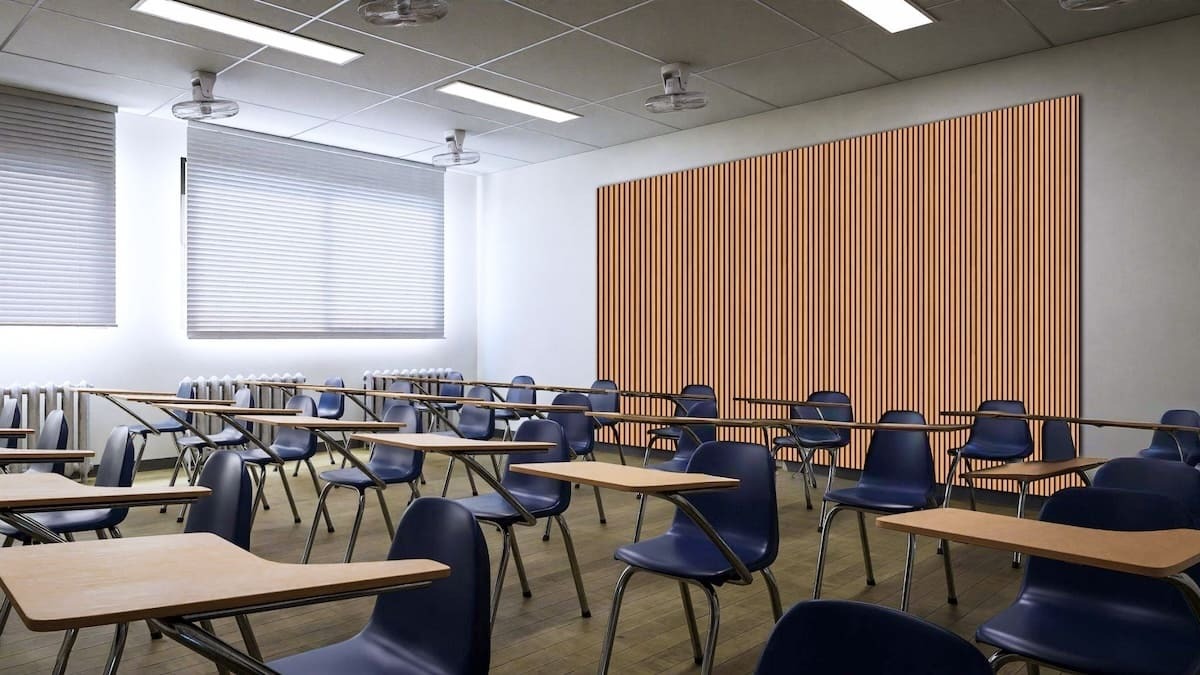
Slat Wood Acoustic Wall Panels in Maple
Effective sound absorption isn’t just about making things quieter—it’s about making spaces more functional, comfortable, and focused.
Materials with higher NRC ratings absorb more sound waves rather than bouncing sound back into the room, which reduces echoes, lowers background noise, and helps to maintain an environment where sound is clear and precise.
In homes and commercial spaces, effective sound absorption can:
- Improve focus and productivity by eliminating sound distractions
- Create an overall more comfortable, relaxing environment
- Reduce ambient noise to make conversation easier
- Create a better listening environment for TV, music, and other types of entertainment
- Enhance audio clarity and acoustic control in music studios, podcasting studios, home offices, classrooms, conference rooms, and commercial gathering spaces
Even in compact rooms, the right acoustic materials can dramatically boost usability and comfort.
How to Achieve Class A Sound Absorption With Acoustic Wall Panels from Barron Designs
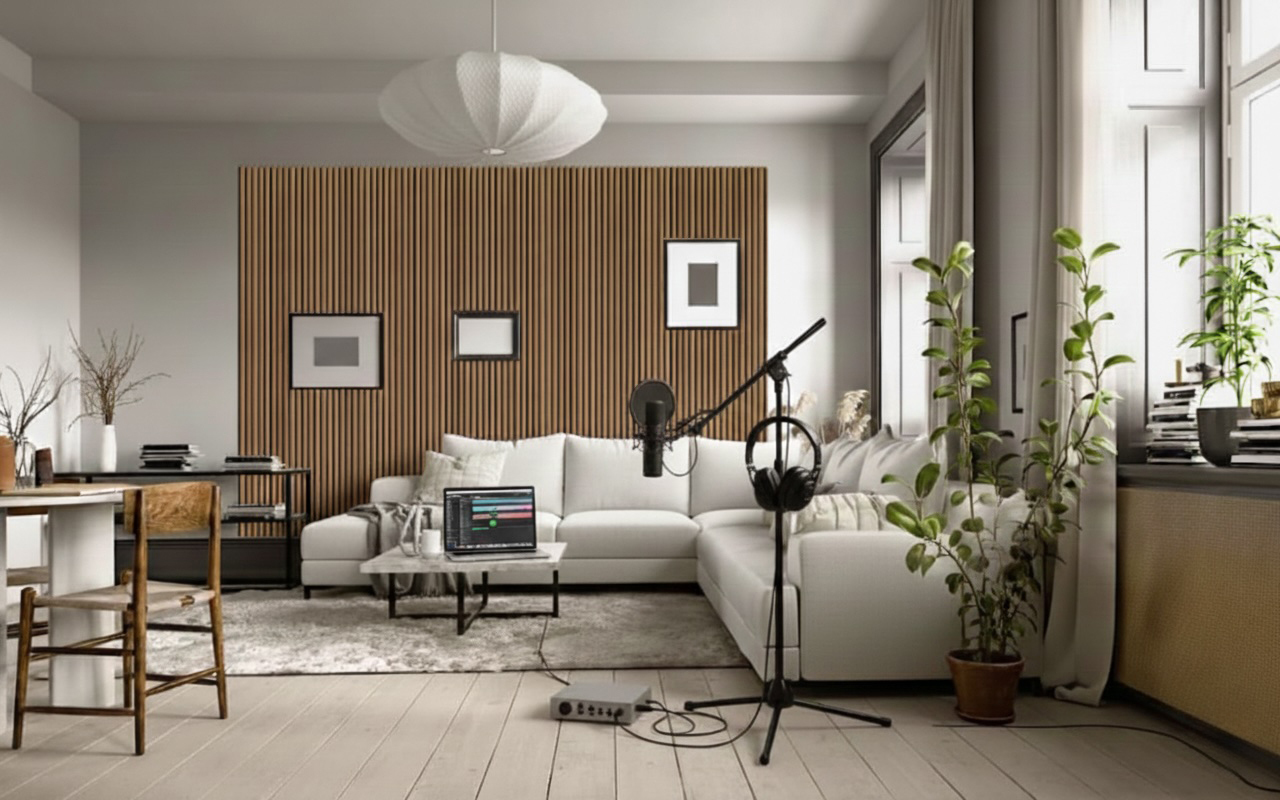
Slat Wood Acoustic Wall Panels in Walnut
Achieving Class A sound absorption doesn’t have to be difficult—or expensive. Acoustic panels make it simple to control sound in any space. Enter: Slat Wood Acoustic Wall Panels by acousticMOD. These modern, decorative panels come in a wide variety of shades—including a Natural Wood color that you can paint or stain to match your décor.
These panels are affordable, visually striking, and DIY-friendly—but how you install them matters. When glued or directly fastened to walls, they offer Class D sound absorption. That’s enough for basic echo reduction, but if you’re aiming for Class A sound absorption, follow these three easy installation steps below.
Step 1: Install Furring Strips or Wood Battens
Secure vertical wood strips to your wall to create space for insulation behind the panel.
Step 2: Add Mineral Wool
In the spaces between battens, insert 45mm mineral wool. This is the real sound absorber.
Step 3: Mount the Panels
Attach the Slat Wood Acoustic Panels to the furring strips/battens—covering the insulation and completing the layered system.
Congrats On Achieving Class A Sound Absorption
This setup absorbs over 90% of sound waves—officially achieving a Class A sound absorption rating. It's cost-effective, stylish, and incredibly simple for motivated DIYers. To guide you through the process, check out our complete acoustic panel installation instructions.
Try Before You Buy: Order an Acoustic Panel Sample

Slat Wood Acoustic Wall Panels in Walnut
Before starting your project, it's always a good idea to order a Slat Wood Acoustic Wall Panel Sample. Seeing the tone, texture, and finish in person helps ensure your design vision comes to life exactly as you imagined.
Transform Sound Performance With Acoustic Wall Panels From Barron Designs
From video calls and focused work to recording production and commercial environment enhancement, acoustically balanced spaces make every experience better.
With Slat Wood Acoustic Wall Panels, you get an elegant, customizable, and effective solution for sound control—no professional installation required. Explore all five panel colors today and take the first step toward achieving affordable, high-performance acoustic comfort.
Shop Related Products