Today’s brick siding options give homeowners more flexibility than ever before. Whether you prefer traditional masonry, lighter-weight brick veneer, decorative brick panels, or full exterior faux brick siding systems, there’s a solution for nearly every architectural style and budget.
If you’re researching brick siding ideas, understanding the differences between these materials is essential. Each option comes with distinct installation requirements, durability expectations, price points, and design flexibility. Below, we break down the most common brick siding options, outline key brick siding pros and cons, and explain where each works best.
Real Brick Rundown
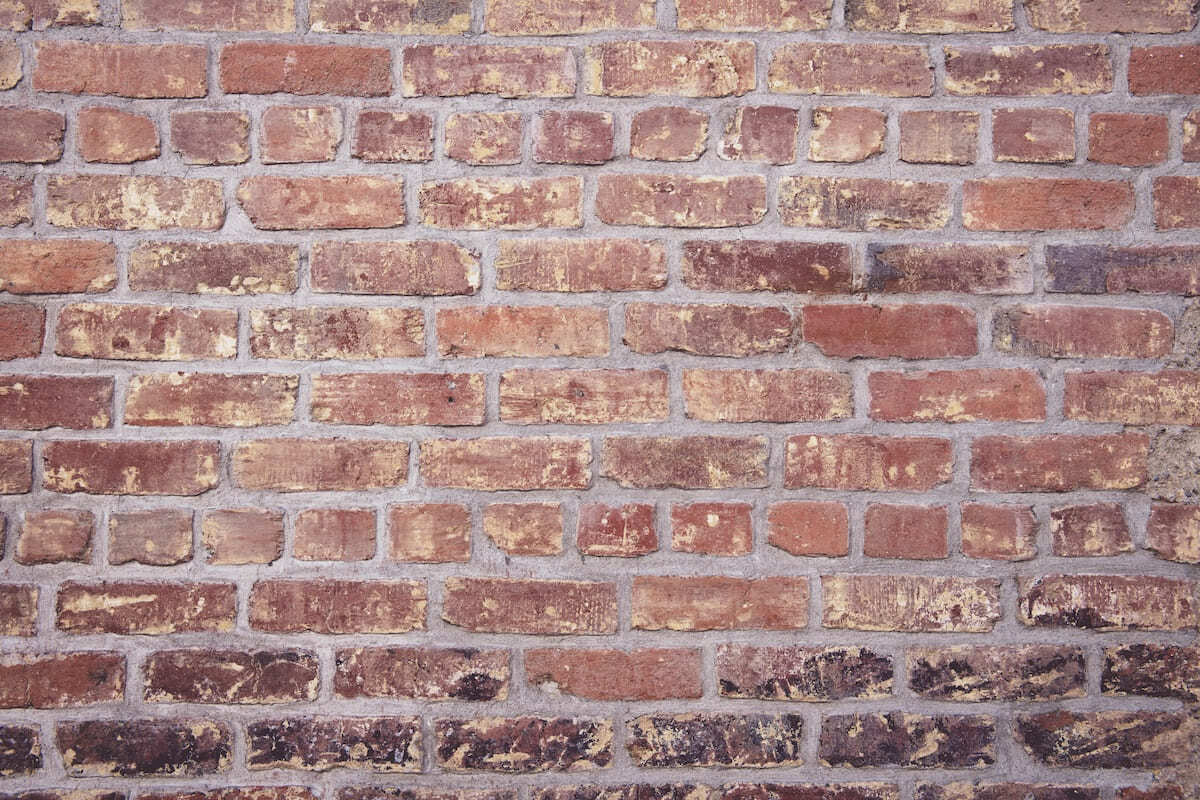
Real brick is the most traditional of all brick siding options available. It's a building material that has been around for millennia, with some of the earliest sun-dried mud bricks dating back to around 7000 BC in the regions of Turkey and Mesopotamia. As such, real brick remains a benchmark for durability and longevity.
Pros of Real Brick
- Extremely long lifespan, up to 100 years or more.
- It’s fire-resistant and highly weather-resistant.
- Delivers a timeless look with strong resale value.
- Routine maintenance is relatively minimal.
Cons of Real Brick
- The highest material and labor costs.
- Extremely heavy, requiring structural support.
- Professional masonry installation required.
- Repairs can be complex and expensive.
Typical Cost
Expect to pay anywhere between $10-$28 per square foot to install real brick. Real brick is generally the most expensive option, and it’s not just the purchase price of the materials that will set you back. It also comes with extremely high labor costs, and you’ll likely need to pay to reinforce your home’s structure to support the weight, too.
Design Trends
Real brick remains popular for traditional homes, historic renovations, and luxury builds. However, due to cost and structural limitations, it is less common in modern mixed-material exteriors.
Best for: Homeowners prioritizing permanence and long-term durability over installation simplicity or cost savings.
Thin Brick Veneer Siding: Real Brick, Reduced Weight
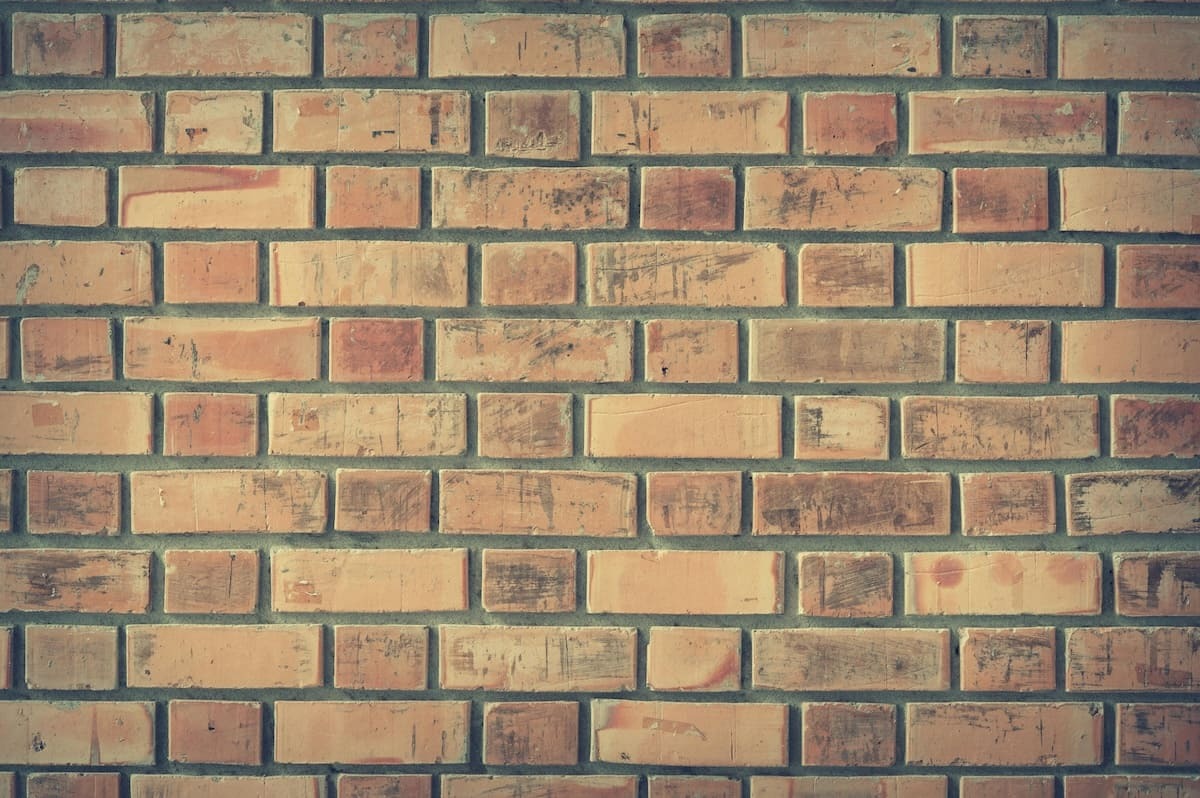
Thin brick veneer uses thin brick units installed over a structural backing rather than forming part of the structure itself. It delivers authentic brick aesthetics with less weight than full masonry.
Pros of Brick Veneer
- Genuine brick look and feel.
- Lighter than full brick construction.
- More affordable than solid masonry.
- Suitable for new builds and remodels.
Cons of Brick Veneer
- Brick veneer still requires expensive professional masonry installation.
- Less durable than full masonry.
- Mortar joints are likely to require more maintenance over time compared to those in full brick construction.
Typical Price Range
Brick veneer generally ranges from $8–$18 per square foot installed. Brick veneer usually falls in the middle range of pricing for brick siding options. Materials and labor cost less compared to real brick siding, but costs will be heavily influenced by labor needs and installation complexity.
Design Trends
Brick veneer is commonly used in transitional architecture and mixed-material exteriors. It pairs well with fiber cement siding, wood accents, and stone veneer.
Faux Brick Panels: Realistic Texture + Design Flexibility
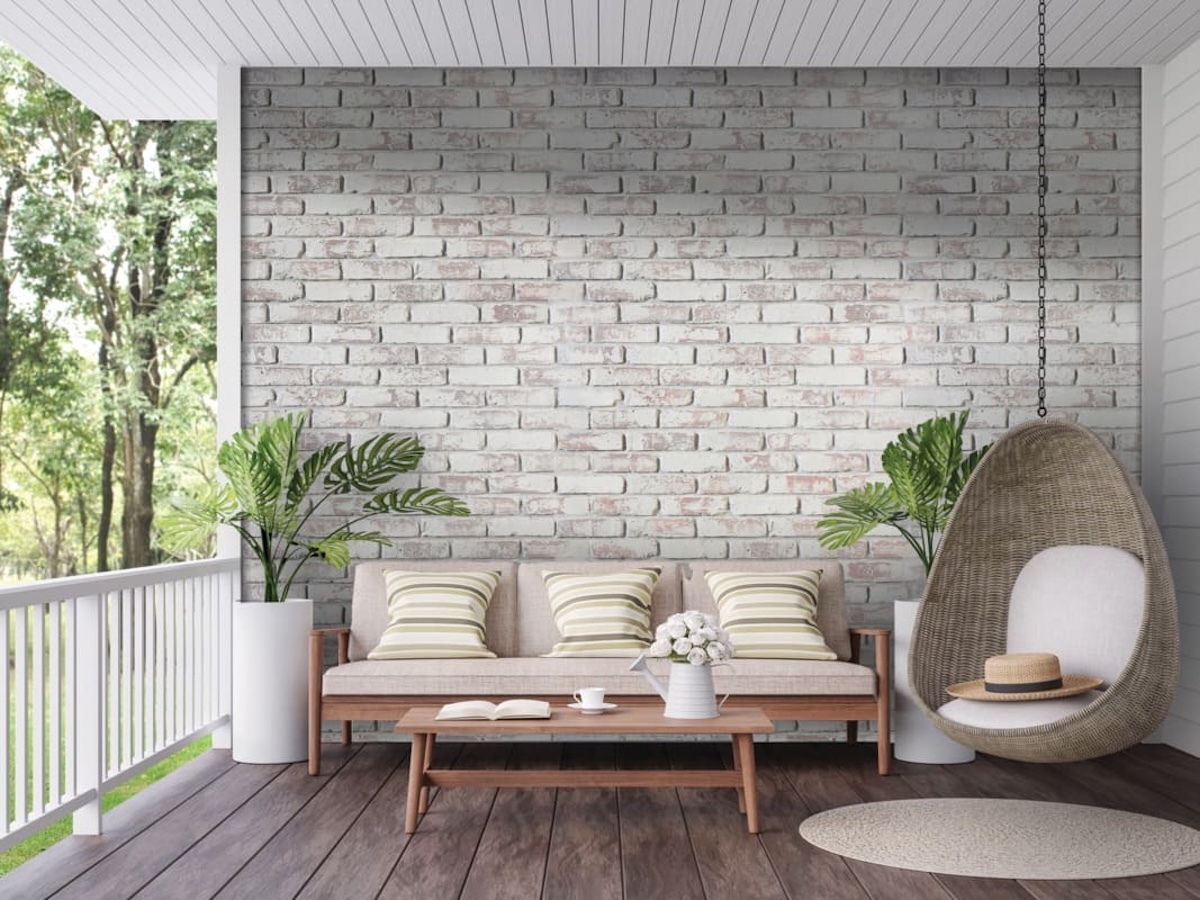
Old Chicago Faux Brick Wall Panels in Whitewash
If you love the look of brick but not the weight, mortar, or installation complexity, faux brick panels offer one of the most versatile brick siding options available today.
Crafted from high-density polyurethane and molded from authentic brick textures, decorative brick wall panels recreate the depth, variation, and character of real brick in a lightweight format that’s far easier to handle.
Unlike traditional brick construction, these panels eliminate the need for structural reinforcement and messy mortar work. With common tools and a streamlined process, you can add brick character to interior and exterior walls alike without overcomplicating your project.
Pros of Faux Brick Panels
- Lightweight and easier to install than masonry.
- No mortar or structural reinforcement required.
- Suitable for both interior and exterior applications.
- More budget-friendly than real brick or brick veneer.
- Ideal for accent walls, columns, entryways, and foundation coverings.
- Allow you to coordinate interior and exterior brick-inspired design.
Cons of Faux Brick Panels
- Not designed to function as a full structural siding system.
- Large exterior applications require careful layout planning.
- As with any panel system, seam placement must be managed properly for a seamless look.
Typical Price Range
Premium faux brick panels from Barron Designs range from $14.83–$23.21 per square foot, depending on style and finish. That price reflects the depth of texture and realism achieved through panels hand-molded from real brick, the versatility of interior and exterior applications, and the easier installation process that reduces labor compared to masonry.
Design Trends
Today’s brick siding ideas are moving beyond bright red traditional brick and into more nuanced, livable palettes.
Current exterior trends favor:
- Warm, earthy browns.
- Softened red blends.
- Whitewashed and limewashed finishes.
- Mixed-material façades with wood or vertical siding.
- Natural, grounded color schemes inspired by stone and clay.
Old Chicago Faux Brick Panel shades like Mocha, Mixed Twilight, or Spiced Brick align seamlessly with these palettes. These tones pair especially well with:
- Dusty sage and olive green siding.
- Warm gray trim.
- Cream and off-white exteriors.
- Black window frames for contrast.
Because faux brick panels can be used indoors and outdoors, they also support one of today’s strongest design movements: creating cohesion between exterior curb appeal and interior accent walls.
Installation Resources
When installing faux brick panels outdoors, proper surface preparation and fastening are key. Panels must be installed over a solid, structurally sound sheathing surface with substantial surface contact.
Key considerations include:
- Ensuring adequate backing and support.
- Planning panel layout to minimize visible seams.
- Proper fastening techniques for exterior exposure.
For full installation guidance, review the Faux Panels Exterior Installation Instructions.
Faux Brick Siding: Full-Exterior Coverage + Streamlined Installation
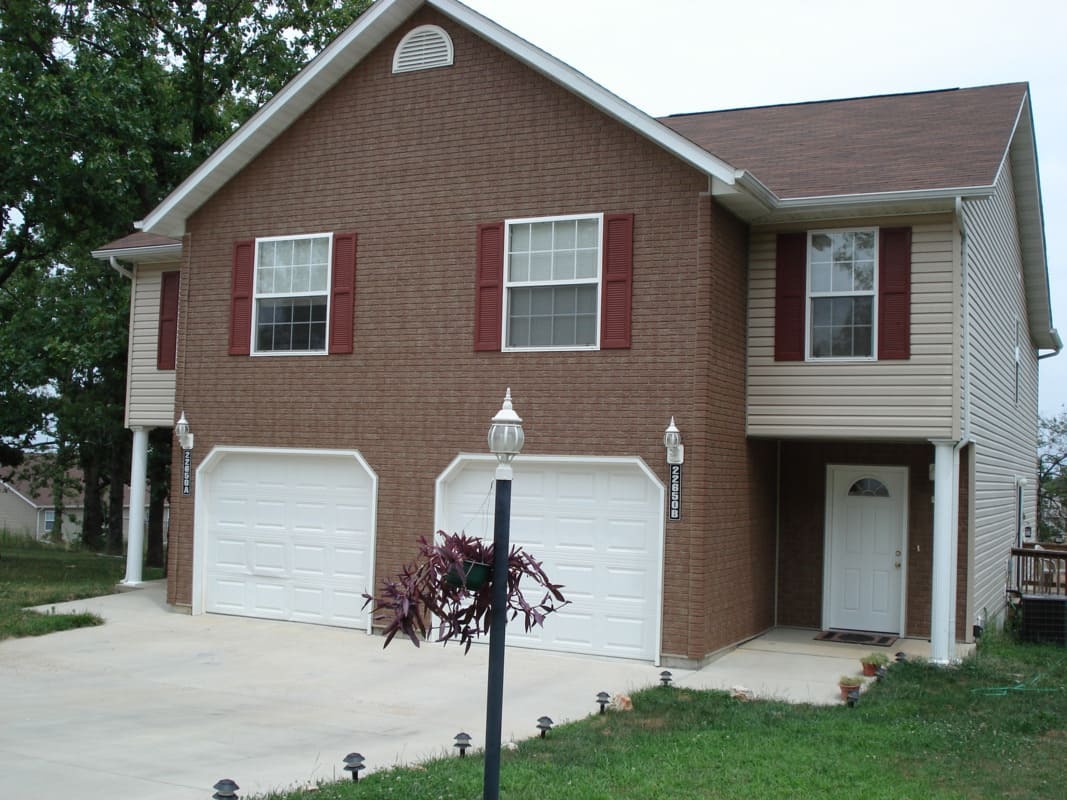
NovikBrick HL Faux Brick Siding in Brown Blend
For homeowners who want the visual depth of brick across an entire façade, NovikBrick HL Faux Brick Siding delivers a remarkably realistic exterior solution without the structural demands of masonry.
Molded with detailed brick texture and finished with natural color variation, this polypropylene siding captures the shadow lines, mortar definition, and dimensional character of traditional brick. From a typical curbside viewing distance, it closely resembles brick veneer or full masonry construction.
Designed specifically for exterior use, it installs similarly to traditional siding systems. There is no mortar, no masonry tools, and no structural reinforcement required.
Pros of NovikBrick Faux Brick Siding
- Designed specifically for full exterior applications.
- Highly realistic brick texture with natural color variation.
- Lightweight compared to real brick and brick veneer.
- Does not require mortar or structural reinforcement.
- Resistant to moisture and freeze-thaw cycles.
- Installs more efficiently than traditional masonry construction.
Cons of NovikBrick Faux Brick Siding
- While it delivers the look of traditional masonry, it may be more difficult to market to potential homebuyers because it’s not traditional masonry.
- The color range is carefully curated to a limited selection of popular shades.
Typical Price Range
NovikBrick HL Faux Brick Siding is $4.54 per square foot, making it one of the most affordable brick siding options for achieving a full brick exterior look.
Because it installs like siding rather than masonry, overall project costs are typically lower due to reduced labor complexity.
Design Trends
Current brick siding ideas favor not only earthy tones, but also warm neutrals and classic brick tones. NovikBrick’s shade range supports each of these trends, and installation accessories can help you achieve clean transitions between exterior materials. Our Novix Siding Color Chart & Pairings Guide will help you choose the right trim and accessories to go with your faux brick siding.
Installation Resources
NovikBrick siding installs in a layered system similar to traditional exterior siding. Proper use of starter strips, corners, trim, and ledges ensures structural alignment and clean transitions.
Key installation considerations include:
- Installing over approved sheathing materials.
- Following starter strip alignment for proper panel engagement.
- Using coordinated corner and trim components for finished edges.
- Allowing for expansion and contraction per manufacturer guidelines.
For step-by-step guidance, review the NovikBrick HL Installation Instructions.
Elevate Your Exterior With the Right Brick Siding
With so many brick siding options available, the right choice comes down to balancing authenticity, budget, installation demands, and long-term performance. Real brick and brick veneer deliver traditional masonry appeal. Faux brick panels and faux brick siding offer a lighter, more flexible approach that aligns with today’s construction methods and evolving design preferences.
When weighing brick siding pros and cons, consider more than just material cost. Factor in labor, structural requirements, maintenance, and how easily the product integrates with mixed-material exteriors.
If you’re drawn to the look of brick but want streamlined installation and design versatility, explore faux brick panels and the NovikBrick HL siding panels. Both provide convincing brick texture with greater flexibility, making it easier to achieve lasting curb appeal without the complexity of full masonry.
Shop Related Products