If you're exploring wainscoting ideas that deliver high-end style without the time, cost, or complexity of traditional materials, faux panels offer one of the most accessible paths forward. Lightweight, easy to install, and impressively realistic, faux panel wainscoting makes it possible to transform a space in a weekend—no specialized tools or contractors required.
In this guide, we’ll walk through how wainscoting works, key design considerations, and how to use faux wall panels to create texture, depth, and architectural interest throughout your home.
Why Faux Panels Are a Natural Fit for Wainscoting
Wainscoting is ultimately about adding structure, texture, and visual weight to the lower portion of a wall—but how you achieve that look has evolved. Today, faux panels have become one of the most practical and design-forward ways to create wainscoting without the limitations of traditional materials.
Instead of relying solely on wood millwork, homeowners can now use materials like faux brick panels, faux stone panels, and faux wood panels to achieve a layered effect, along with enhanced texture and far less installation complexity.
Because these panels are lightweight and designed for straightforward installation, they make it easier to experiment with height, layout, and style. That flexibility opens the door to more creative wainscoting ideas, especially for DIY projects or spaces where traditional materials would be too heavy or labor-intensive.
If you’re looking for a broader overview of styles and layouts, explore our Interior Wainscoting Ideas resource.
Wainscoting Design Guidelines
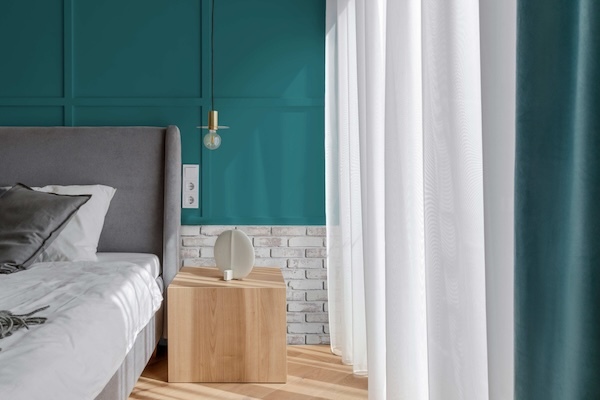
Old Chicago Faux Brick Wall Panels in Whitewash Brick
When installing wainscoting, there are several guidelines to consider to make sure that everything looks its best. Generally speaking, wainscoting is installed on the lower part of a wall. The rule of thumb is that the panels should be about one-third of the height between the floor and the ceiling (also known as the chair-rail level).
If you’re planning your layout, it can help to reference detailed guidance on the best height for wainscoting in every room, especially when working across spaces with different ceiling heights or architectural features.
It’s also important to take into account the placement of windows on your outside walls. Let’s say, for example, you are installing wainscoting 32 inches above the finished floor, but your window sills are 31 inches above the floor. That one inch of difference would look odd and would cause your eye to be drawn to the slight but obvious difference in height. In this case, it would make more sense to raise the height of the wainscoting. Breaking the one-third rule and creating taller panels will look like a design choice rather than an error.
If you’d like a more modern look, you can raise your wainscoting’s height to 24 inches below the ceiling of the room. Then, cover the remaining 2 feet with a punchy color of paint or vibrant wallpaper. When it comes to wainscoting, rules are sometimes made to be broken.
When working with faux panels, these guidelines become even more flexible. Because the materials are lightweight and easy to cut, you can adjust panel height, spacing, and layout without the constraints that come with traditional millwork or masonry. This makes it easier to customize your design so it feels intentional—whether you’re sticking to classic proportions or pushing into more modern layouts.
Choosing the Right Faux Panel Style for Your Space
Does your home have a bohemian vibe or a formal flair? No matter what your aesthetic, you can find wainscoting to match. When designing your room, think about complementary textures and colors.
One of the biggest advantages of faux panel wainscoting is how easily it adapts to different design styles. Rather than forcing your space into a single look, you can use material, texture, and finish to reinforce the style you already have—or subtly shift it in a new direction.
Here’s how faux panel wainscoting can support a range of popular design styles:
- For relaxed, layered interiors: Natural textures like faux wood panels pair well with styles like bohemian style and farmhouse style design ideas, where warmth and variation are key.
- For clean, modern spaces: faux brick panels or smoother finishes can complement modern style interior design ideas by adding subtle contrast without disrupting clean lines.
- For coastal or transitional looks: Lighter-toned faux stone panels or softly textured wood tones align well with modern coastal design and transitional style, where balance and softness are key.
- For more industrial or urban interiors: Brick-inspired textures and deeper tones naturally fit within urban & industrial style, adding character without overwhelming the space.
Because all of these options fall under the broader category of faux wall panels, you can create a consistent design language across different rooms while still tailoring each space to its specific function and style.
Once you have chosen your desired type of wainscoting, it’s easy to design the rest of the room to complement it. Wicker and macrame touches are great for both boho chic and farmhouse styles, and metallic accents fit perfectly within an industrial or modern living space. You can create a cohesive feel without the headache of complex renovations.
How To Install Faux Panel Wainscoting
With the right preparation, many homeowners can complete a faux panel wainscoting project over a weekend. Our panels are lightweight and can be installed using screws or adhesive, without the need for specialized tools or equipment. They can also be cut with a standard saw, making it easy to adjust panels to fit your space.
Once you’ve determined the height and layout, install the panels directly over existing drywall. For best results, work on a clean, flat surface to ensure proper adhesion and long-term performance. If you’d like a more detailed walkthrough, our faux panel interior installation instructions cover each step from layout to finishing.
To complete the look, consider adding a top ledger to cap the wainscoting. This creates a clean transition between the paneling and the upper wall, giving the installation a more finished, built-in feel. Faux panel ledgers are designed specifically for this purpose and help tie the entire design together.
Once installed, faux panels are highly durable and low-maintenance, maintaining their appearance over time while delivering the look of real wood, brick, or stone—without the added weight or complexity.
Shop Related Products